About BHTH
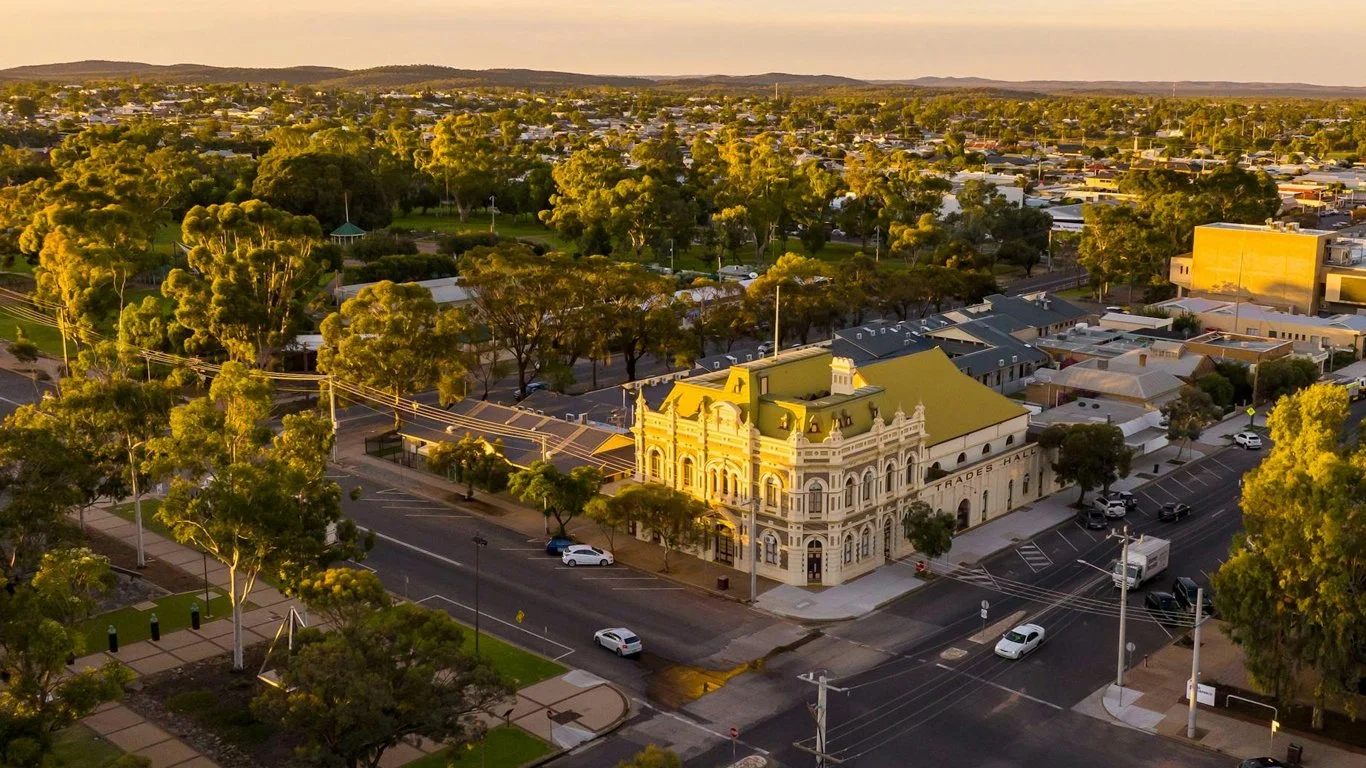
Broken Hill Trades Hall is a living symbol of the city’s proud union and labour history. Built by workers for workers, it has long been a place where people come together to organise, learn, and stand up for fairness, dignity, and collective strength in the workplace and beyond.
History
Broken Hill Trades Hall is still actively used today much as it was over a century ago. It continues to function as a centre for trade union activity, with local union offices and meetings held on site.
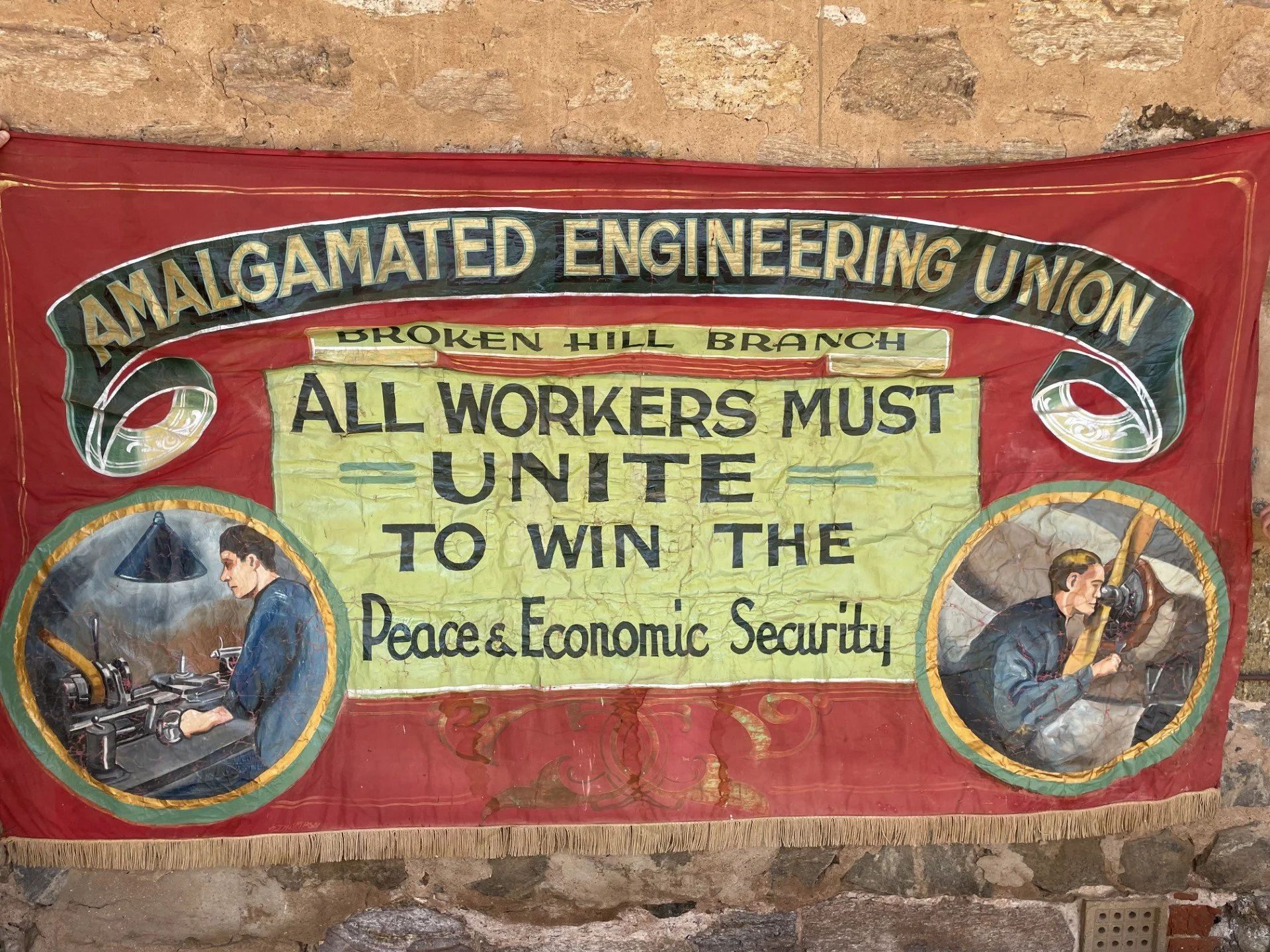
The main hall and meeting rooms host a range of industrial, political and social functions, and the building also houses an important heritage collection of union records, banners, picket maps and other material reflecting the city’s labour movement history.
The Broken Hill Trades Hall is currently part of an active bid with several other Trade Union buildings around the world to secure UNESCO World Heritage status as a site of outstanding universal value, reflecting its importance in the global history of workers’ rights and labour organisation.
-
Trade union organisation in Broken Hill began alongside the earliest days of mining on the Line of Lode. In 1884, miners met in nearby Silverton to form the Barrier Miners’ Association, which soon relocated to Broken Hill. After a series of bitter industrial disputes in the 1890s and first two decades of the 20th century, unions had secured major advances, including compulsory union membership, an eight-hour day, the “lead bonus”, and compensation for injured workers - achievements that placed Broken Hill at the forefront of labour reform in Australia and globally.
-
The economic depression of the 1890s brought fierce conflict between mining companies and unions, culminating in the 1892 Broken Hill miners’ strike. When companies attempted to impose contract labour and reduced wages, miners withdrew their labour and resisted the importation of non-union workers. The strike was ultimately defeated, union leaders were imprisoned, and membership collapsed—yet the resolve to build a permanent home for union organisation endured.
-
Plans for a Trades Hall had been made as early as the 1880s, but donations from Broken Hill unions to the great London docks strike of 1889 meant that construction did not begin until 1898. Designed by local architect Tom Jackson, the first stage of the building opened in January 1899, with British trade unionist Ben Tillett laying the foundation stone. Through determined fundraising by local and interstate unions, the hall was completed in 1905. It became a lasting symbol of workers’ collective strength following years of hardship.
-
In the early 20th century, Broken Hill Trades Hall was a hub of political debate, education and organising. The unions established their own newspaper and social democratic institutions, and the hall hosted prominent labour figures, including international socialist and former miner Tom Mann. These years cemented Broken Hill’s reputation as a stronghold of militant unionism and socialist thought.
-
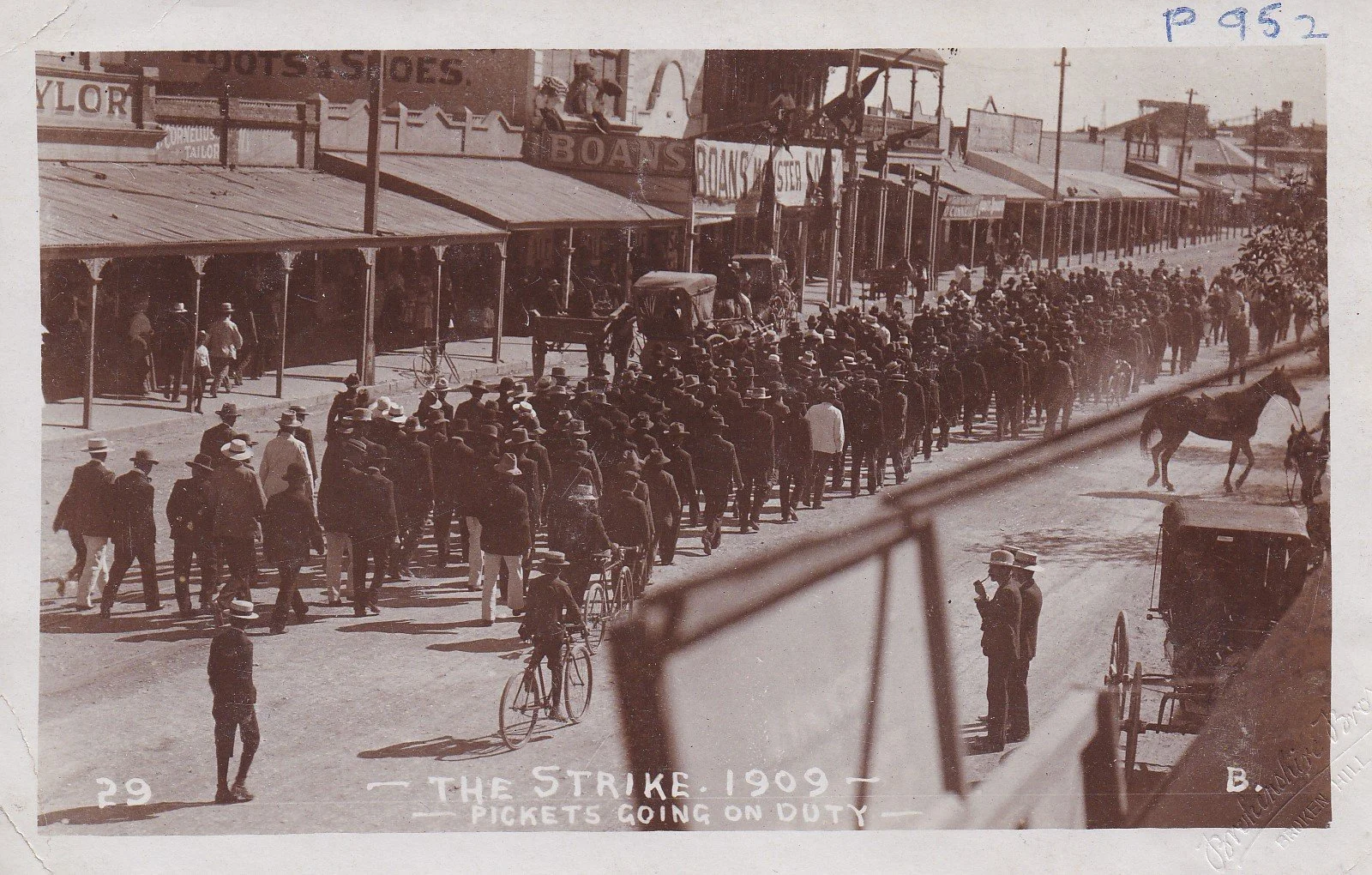
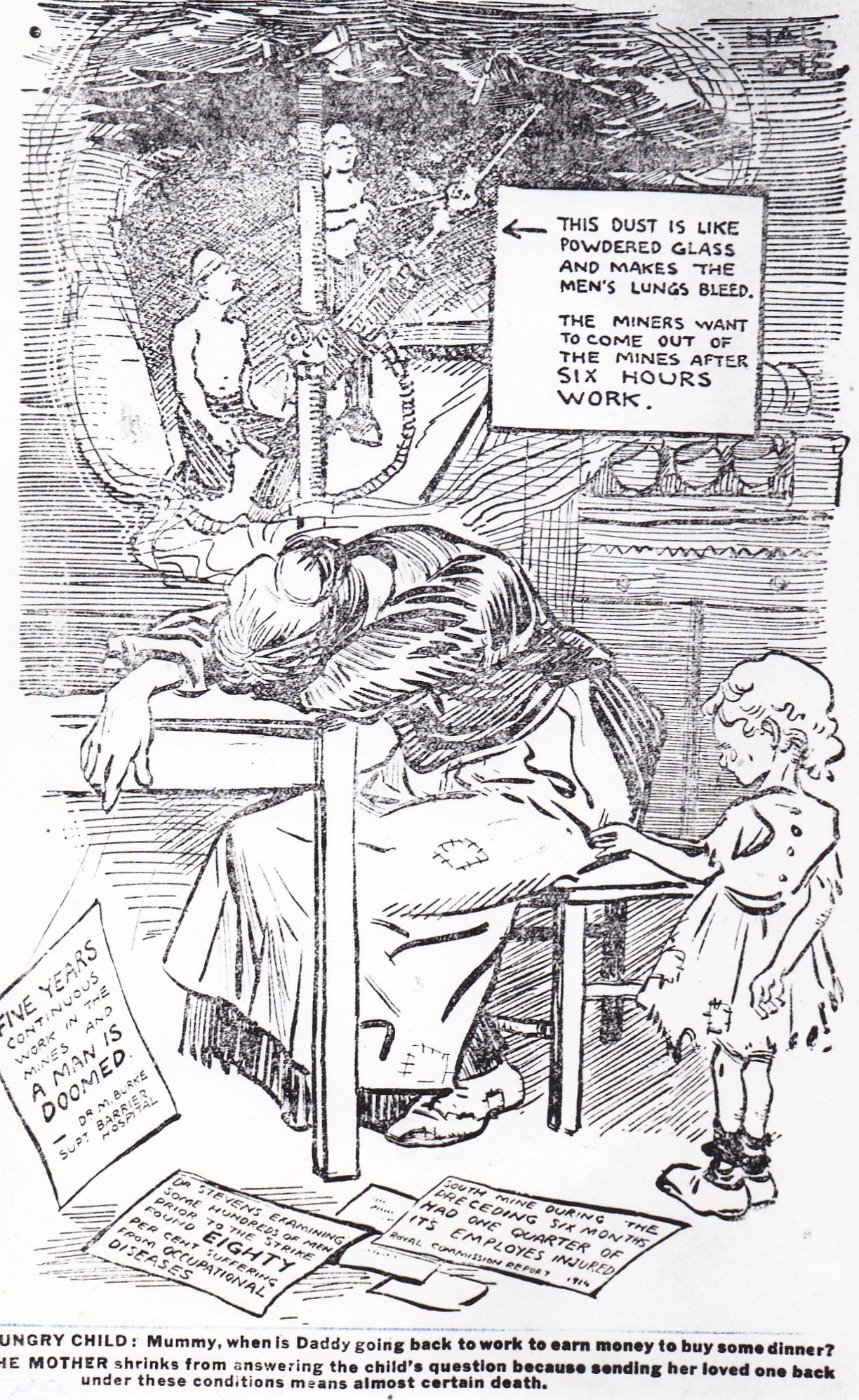
Major industrial conflict returned in 1909 when BHP attempted to reduce wages, leading to a prolonged lockout marked by pickets and clashes with police. After World War I, renewed union campaigning focused on shorter hours and safer conditions. Sustained industrial action in 1919–1920 resulted in the introduction of a 35-hour working week, a landmark victory for workers in Broken Hill.
-
Throughout the 20th century and into the present day, Broken Hill Trades Hall has continued to serve as an active centre for union life. It houses union offices, hosts meetings and events, and remains closely connected to the industrial and social life of the city. The hall also cares for a nationally significant collection of union banners, badges, documents and artefacts, including picket maps from historic disputes.
-
Largely unchanged since its construction, Broken Hill Trades Hall is one of the city’s most prominent surviving Victorian-era buildings, noted for its distinctive architecture and painted ceiling. In 1999 it was added to the NSW State Heritage Register, recognising its historical, architectural and social significance. Today, the Trades Hall stands as both a working union space and a powerful reminder of the struggles and achievements that helped shape workers’ rights in Australia.
-
Read a history of the Barrier Industrial Council here.